




Ashwagandha has become one of the world’s most searched herbal supplements. From stress management and sleep support to athletic recovery and cognitive wellness, millions of consumers now use Withania somnifera as part of their daily health routine.
But there’s one critical detail most people overlook:
Not all ashwagandha supplements use the same part of the plant.
Some products use only the root. Others use leaves. Many combine both without clearly explaining the difference.
That distinction matters more than most brands admit.
If you’ve ever wondered whether ashwagandha root vs leaves truly makes a difference, the answer is yes — especially when it comes to scientific research, safety profiles, traditional Ayurvedic use, and long-term quality.
In this article, we’ll break down:
- The difference between root and leaf extracts
- Why most clinical studies focus on root-only formulas
- Safety concerns linked to leaf-heavy products
- How to choose a better supplement
- Which Amazon options are worth considering
And if you want the complete science-backed breakdown on ashwagandha itself, dosage, benefits, and usage, you can explore our pillar guide here:
👉 Ultimate Guide to Ashwagandha
Ultimate Guide to Ashwagandha
What Is Ashwagandha?
Ashwagandha (Withania somnifera) is an adaptogenic herb used for centuries in Ayurvedic medicine. Traditionally, practitioners primarily used the root for its balancing and restorative properties.
Modern supplements often standardize compounds called withanolides, which are believed to contribute to many of the herb’s biological effects.
However, the concentration and composition of these compounds differ significantly between the root and the leaves.
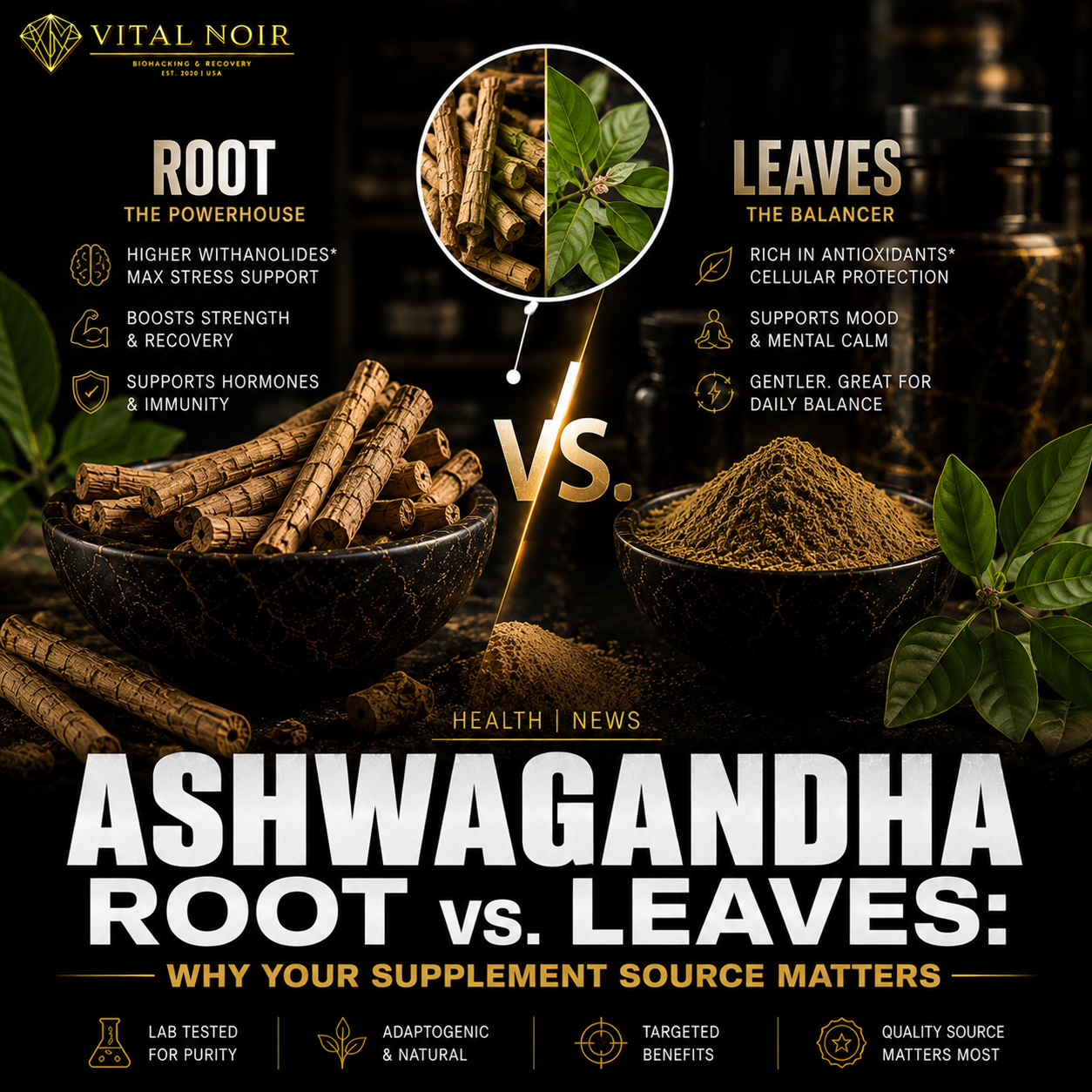
Ashwagandha Root vs Leaves: What’s the Difference?
Ashwagandha Root
The root is the most researched and traditionally used part of the plant.
Most human clinical trials evaluating stress response, sleep quality, exercise performance, and cortisol balance use standardized root-only extracts.
Root extracts are generally preferred because they:
- Have a more established safety profile
- Align with traditional Ayurvedic preparation
- Contain balanced withanolide ratios
- Are supported by the majority of human studies
Ashwagandha Leaves
Leaves contain different phytochemical concentrations, including higher levels of certain compounds such as Withaferin A.
Some manufacturers use leaf material because it can artificially increase total withanolide percentages at a lower production cost.
However, higher withanolide numbers do not automatically mean a better or safer supplement.
Emerging discussions in toxicology and regulatory circles have raised questions about excessive leaf-derived compounds, particularly when products are poorly standardized.
Why Root-Only Extracts Dominate Clinical Research
One of the strongest arguments for root-based supplements is simple:
Most high-quality human studies use root-only formulations.
Research on standardized root extracts has shown promising results for:
- Stress reduction
- Cortisol regulation
- Sleep quality
- Exercise recovery
- Mood support
- Cognitive performance
Several placebo-controlled studies found root extracts to be generally well tolerated when used within studied dosage ranges.
The National Institutes of Health also notes that commercial products may contain root, leaf, or mixed extracts — but the compositions differ substantially.
That matters because:
- Different plant parts produce different phytochemical profiles
- Research findings cannot always be generalized across formulations
- Safety data is stronger for standardized root extracts
The Withanolide Confusion
Many supplement labels aggressively market “high withanolide percentages.”
But consumers should understand something important:
More withanolides does not always equal better quality.
Some leaf-heavy products achieve inflated withanolide levels because leaves naturally contain more reactive compounds.
A well-designed root extract may contain lower total withanolides while still offering:
- Better balance
- Better tolerability
- More clinical validation
- More traditional alignment
This is why many respected root extracts standardize around moderate percentages instead of chasing extreme potency claims.
Are Ashwagandha Leaves Unsafe?
The science is still evolving, so absolute statements should be avoided.
However, several reviews and toxicology discussions suggest caution around poorly standardized leaf-based products.
Researchers have also noted that:
- Many safety studies specifically evaluate root-only extracts
- Some adverse event reports involve mixed formulations
- Long-term safety data remains limited for certain leaf-heavy products
That does not automatically mean every leaf extract is harmful.
It does mean consumers should prioritize:
- Transparency
- Third-party testing
- Standardized manufacturing
- Clinically studied formulations
- Clear ingredient sourcing
How to Choose a Better Ashwagandha Supplement
When shopping for ashwagandha, focus less on marketing buzzwords and more on evidence-backed formulation quality.
Look For:
- Root-only extracts
- Organic sourcing
- Standardized withanolides
- Transparent labeling
- Third-party testing
- Clinically studied ingredients
Be Cautious With:
- Extremely high withanolide claims
- Hidden proprietary blends
- Unclear root-to-leaf ratios
- Brands without testing transparency
Amazon Recommendations
Best for Organic Root Powder
Organic Spice Resource Ashwagandha Root Powder
- Organic root powder
- Non-GMO
- Bulk powder format
- Ideal for smoothies, teas, and wellness routines
Powdered root can be useful for consumers who prefer less processed herbal formats.

- PREMIUM USDA ORGANIC ASHWAGANDHA POWDER (WITHANIA SOMNIFERA or INDIAN GINSENG): Our Gluten Free Organic Ashwagandha Root…
- NATURAL ADAPTOGEN: Often referred to as the “Indian Ginseng”, Ashwagandha Root is known for its adaptogen properties – s…
- AYURVEDA TRADITIONAL USE: For thousands of years as a rasayana (rejuvenative) and an adaptogenic herb, meaning that it h…
Why Ingredient Transparency Matters More Than Marketing
The supplement industry often prioritizes trends over clarity.
But with adaptogens like ashwagandha, ingredient sourcing matters.
Consumers increasingly want:
- Evidence-backed supplements
- Transparent manufacturing
- Clinically studied ingredients
- Safer long-term wellness strategies
That’s why understanding the difference between ashwagandha root vs leaves is no longer optional — it’s part of making informed decisions.
Final Thoughts
When comparing ashwagandha root vs leaves, the evidence currently favors standardized root-based formulations for most consumers.
Root extracts:
- Dominate clinical research
- Align with traditional Ayurvedic use
- Show stronger safety consistency
- Offer more reliable formulation standards
Leaf-based products may still have emerging applications, but they remain less studied and more controversial in modern supplement discussions.
If you want the safest path forward, prioritize:
- Root-only extracts
- Transparent brands
- Evidence-based formulations
- Real clinical validation
And if you want a complete deep dive into benefits, dosage, timing, science, and adaptogenic effects, read our full pillar guide here:
👉 Ultimate Guide to Ashwagandha
FAQ Section
Is ashwagandha root better than leaves?
Most clinical studies and traditional Ayurvedic practices focus on the root, making it the preferred option for many consumers.
Why do some supplements use leaves?
Leaves can increase total withanolide percentages at a lower cost, which may appeal to manufacturers marketing “high potency” products.
What are withanolides?
Withanolides are bioactive compounds naturally found in ashwagandha and believed to contribute to many of its adaptogenic effects.
Are root-only extracts safer?
Current evidence suggests root-only extracts have stronger safety documentation and more human clinical research.
Should I avoid leaf extracts completely?
Not necessarily. But consumers should prioritize transparent brands with standardized testing and clear sourcing practices.