




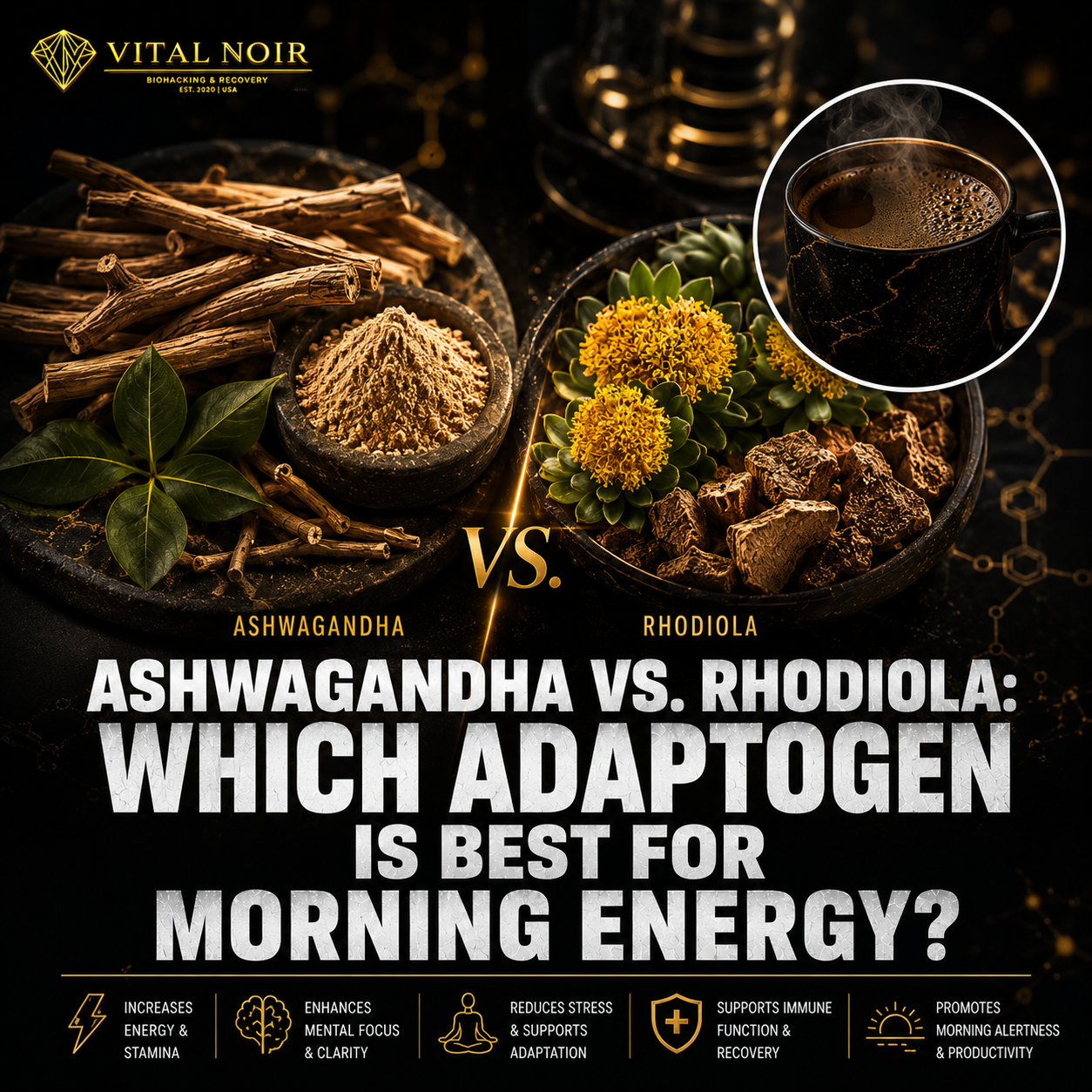
If you’ve been searching for natural ways to improve energy, focus, and resilience without relying heavily on caffeine, you’ve probably encountered two adaptogens repeatedly:
Ashwagandha and Rhodiola.
Both herbs are widely used for stress support and mental performance. But when comparing ashwagandha vs rhodiola specifically for morning energy, the differences become important.
While both adaptogens may help the body adapt to stress, they affect energy, mood, and stimulation differently.
So which one is better for:
- Morning focus?
- Productivity?
- Physical energy?
- Stress-related fatigue?
- Long-term balance?
The answer depends on your biology, stress levels, and wellness goals.
In this guide, we’ll compare:
- How each adaptogen works
- Scientific research behind both herbs
- Which one may be better for energy vs calmness
- Potential side effects
- Whether combining them makes sense
- Recommended Amazon products
And if you want a complete science-backed deep dive into ashwagandha itself, including dosage, root extracts, timing, and benefits, explore our pillar guide here:
👉 Ultimate Guide to Ashwagandha
Ultimate Guide to Ashwagandha
What Are Adaptogens?
Adaptogens are natural compounds believed to help the body adapt to physical, mental, and environmental stress.
Unlike stimulants that artificially boost energy, adaptogens may support:
- Stress resilience
- Cognitive balance
- Hormonal regulation
- Fatigue recovery
- Nervous system stability
However, not all adaptogens produce the same effects.
That’s especially true when comparing ashwagandha vs rhodiola.
What Is Ashwagandha?
Ashwagandha (Withania somnifera) is a traditional Ayurvedic herb primarily associated with:
- Stress reduction
- Nervous system support
- Sleep quality
- Cortisol balance
- Recovery and resilience
Most research focuses on root extracts standardized for withanolides. Several clinical studies suggest ashwagandha may help reduce perceived stress and improve overall well-being. (ods.od.nih.gov)
Ashwagandha is often considered:
- More calming
- More grounding
- Better for chronic stress and burnout
- Helpful for evening recovery
What Is Rhodiola?
Rhodiola rosea is an adaptogenic herb traditionally used in parts of Europe and Asia for:
- Physical endurance
- Mental stamina
- Fatigue reduction
- Cognitive performance
- Stress adaptation
Rhodiola is often associated with:
- Faster mental activation
- Increased alertness
- Improved focus
- Better daytime productivity
Some studies suggest rhodiola may reduce fatigue and support mental performance under stress. (nih.gov)
Compared to ashwagandha, rhodiola is generally viewed as:
- More stimulating
- More energizing
- Better suited for daytime use
Ashwagandha vs Rhodiola: Key Differences
| Feature | Ashwagandha | Rhodiola |
|---|---|---|
| Traditional System | Ayurveda | European & Asian herbal medicine |
| Primary Effect | Calming & restorative | Energizing & stimulating |
| Best For | Chronic stress | Mental fatigue |
| Ideal Timing | Evening or flexible | Morning or early afternoon |
| Sleep Support | Often beneficial | May be too stimulating late |
| Focus Support | Indirect through stress reduction | More direct cognitive activation |
| Physical Recovery | Strong evidence emerging | Moderate evidence |
| Energy Type | Calm, stable energy | Fast, alert energy |
Which Adaptogen Is Better for Morning Energy?
For many people, Rhodiola is the better choice for immediate morning energy and focus.
Its effects are often described as:
- Mentally stimulating
- Motivating
- Productivity-enhancing
- Fast-acting
This makes rhodiola attractive for:
- Busy professionals
- Students
- Athletes
- High cognitive workloads
- Stress-related daytime fatigue
However, there’s an important nuance.
If your low energy is caused by chronic stress or poor recovery, ashwagandha may help more long term.
That’s because fatigue is not always caused by lack of stimulation.
Sometimes it’s caused by:
- Elevated cortisol
- Nervous system overload
- Sleep disruption
- Chronic stress accumulation
In those cases, ashwagandha’s calming properties may indirectly improve daytime energy over time.
Can You Take Ashwagandha and Rhodiola Together?
Some wellness formulations combine both adaptogens because they may complement each other.
The theory is:
- Rhodiola supports alertness and daytime focus
- Ashwagandha supports stress resilience and recovery
However, responses vary between individuals.
Consumers should:
- Start with low doses
- Avoid stacking multiple stimulatory supplements
- Consult a healthcare professional if taking medications or managing health conditions
Research on combined long-term usage remains limited.
Scientific Research: What Does the Evidence Say?
Ashwagandha Research
Clinical studies have evaluated ashwagandha for:
- Stress reduction
- Cortisol balance
- Sleep quality
- Exercise recovery
- Mood support
Several randomized controlled trials suggest measurable improvements in perceived stress and anxiety markers. (mdpi.com)
Rhodiola Research
Research on rhodiola has explored:
- Mental fatigue
- Cognitive performance
- Burnout symptoms
- Physical endurance
Some evidence suggests rhodiola may improve fatigue resistance and attention under stress conditions. (nih.gov)
Still, more large-scale standardized trials are needed for both herbs.
Potential Side Effects and Safety
Both herbs are generally well tolerated when used appropriately, but neither should be viewed as risk-free.
Ashwagandha Side Effects
Possible side effects may include:
- Digestive discomfort
- Drowsiness
- Hormonal interactions
- Rare liver-related concerns
Rhodiola Side Effects
Possible side effects may include:
- Jitteriness
- Dry mouth
- Dizziness
- Overstimulation in sensitive individuals
Consumers should prioritize:
- Clinically studied extracts
- Third-party tested brands
- Transparent ingredient sourcing
Amazon Recommendations
Best Ashwagandha Supplement for Stress Support
NaturaLife Labs Organic Ashwagandha
- Organic root powder formula
- 2100 mg per serving
- Vegetarian capsules
- Root-focused formulation
- Popular for stress balance and recovery support
This is a solid option for consumers looking for a calmer, more restorative adaptogenic experience.

- ✔️ Made with organic ashwagandha root powder and root extract for a full-spectrum supplement
- ✔️ 2,100 mg per serving, including organic ashwagandha root powder, standardized root extract (2.5% withanolides), and o…
- ✔️ USDA Certified Organic, Non-GMO, Gluten-Free, and Vegan
Best Rhodiola Supplement for Morning Energy
Zazzee Rhodiola Rosea Extract
- USDA Organic
- 3000 mg potency
- 10:1 concentrated extract
- Vegan capsules
- Designed for energy, focus, and cognitive support
This type of rhodiola supplement may be particularly appealing for productivity-focused users seeking daytime mental performance support.
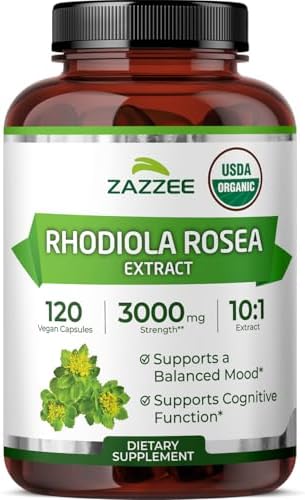
- OUTSTANDING VALUE / 4 MONTH SUPPLY: Our Certified Organic Rhodiola Extract contains 120 capsules per bottle, is made fro…
- USDA CERTIFIED ORGANIC: Any Rhodiola that is not CERTIFIED organic can be highly contaminated and even harmful. With Zaz…
- POTENT 10:1 EXTRACT: Our Organic Rhodiola Extract Capsules are derived from a potent, concentrated 10:1 extract, making …
Who Should Choose Ashwagandha?
Ashwagandha may be a better fit if you:
- Feel chronically stressed
- Struggle with recovery
- Experience poor sleep
- Feel mentally exhausted
- Want calmer, more stable energy
Who Should Choose Rhodiola?
Rhodiola may be a better fit if you:
- Need immediate daytime focus
- Experience mental fatigue
- Want productivity support
- Prefer energizing adaptogens
- Need support during demanding work periods
Final Verdict: Ashwagandha vs Rhodiola
When comparing ashwagandha vs rhodiola for morning energy, rhodiola is generally the more energizing adaptogen.
But the best choice depends on why your energy is low.
Choose Rhodiola If:
- You want stimulation and focus
- You experience daytime fatigue
- You need cognitive performance support
Choose Ashwagandha If:
- Stress is draining your energy
- You need recovery support
- You want calmer, sustainable balance
For some individuals, both adaptogens may play complementary roles within a broader wellness strategy.
And if you want a deeper understanding of ashwagandha benefits, dosage, root extracts, and scientific research, visit our complete guide here:
👉 Ultimate Guide to Ashwagandha
FAQ Section
Is rhodiola stronger than ashwagandha for energy?
Rhodiola is generally considered more stimulating and may provide faster perceived energy support.
Can I take rhodiola and ashwagandha together?
Some people combine them, but responses vary. Start cautiously and consult a healthcare professional if needed.
Does ashwagandha increase energy?
Indirectly, yes. Ashwagandha may improve energy over time by helping the body manage chronic stress.
Is rhodiola good for focus?
Research suggests rhodiola may help support cognitive performance and reduce fatigue during stressful periods.
Which adaptogen is better for anxiety?
Ashwagandha is generally considered more calming and may be better suited for stress-related tension.