




Table of Contents
- What Clinical Research Says About Ashwagandha and Anxiety
- How Long Does Ashwagandha Take to Work for Anxiety?
- Why Ashwagandha Works Gradually
- Factors That Affect How Fast Ashwagandha Works
- Can Ashwagandha Work Faster for Some People?
- Potential Side Effects and Safety Considerations
- Recommended Ashwagandha Products
- Should You Try Ashwagandha for Anxiety?
- Final Thoughts
- FAQ
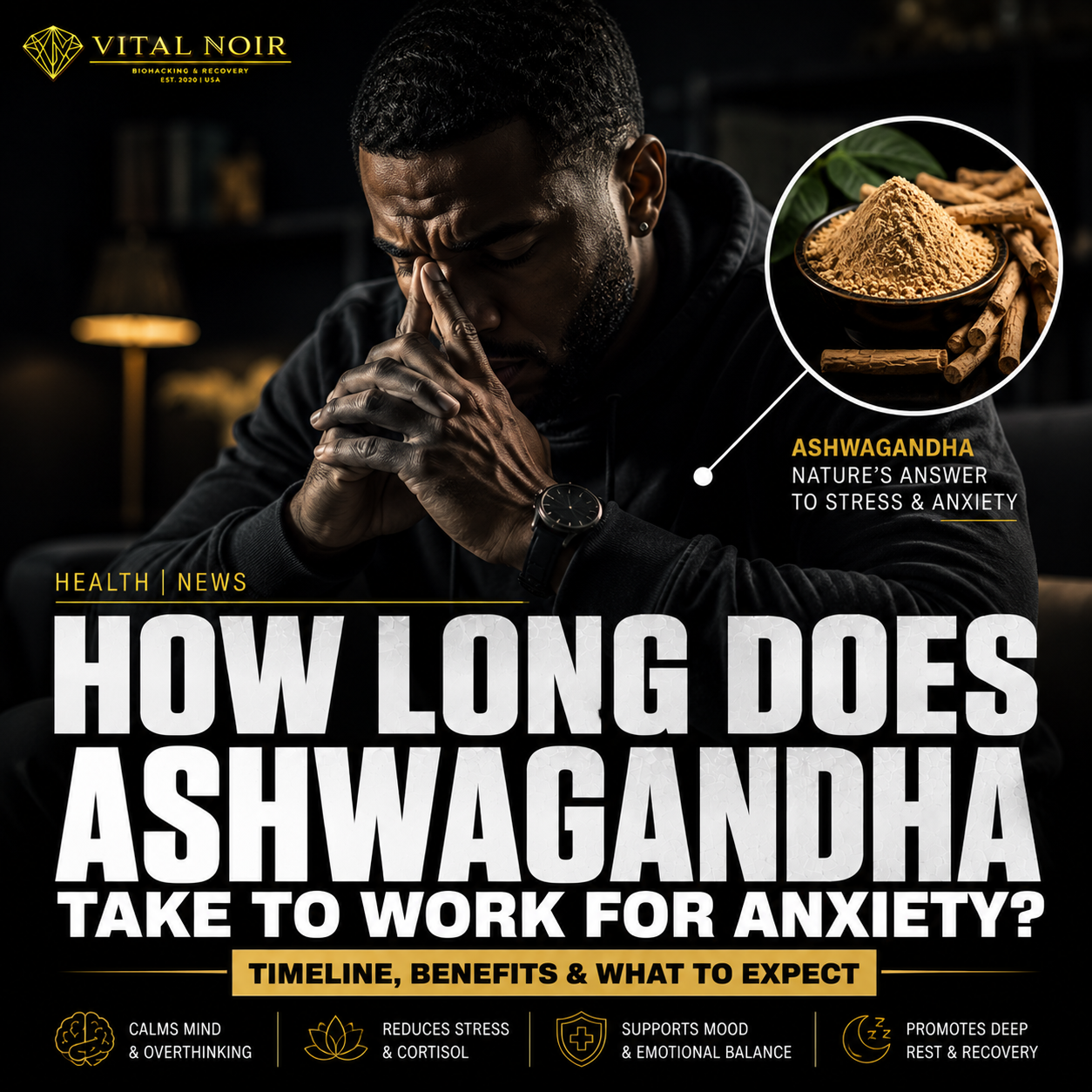
Anxiety relief rarely happens overnight — even with natural supplements. One of the most common questions people ask is: how long does ashwagandha take to work for anxiety?
The short answer: most people begin noticing subtle improvements within 2 to 4 weeks, while stronger and more consistent effects usually appear after 6 to 8 weeks of daily use. Clinical studies consistently show that ashwagandha works gradually by helping regulate the body’s stress response and cortisol levels over time. (ScienceInsights)
If you are completely new to this herb and want a full breakdown of its benefits, mechanisms, history, dosage forms, and scientific background, start with our pillar guide:
“The Ultimate Guide to Ashwagandha”
This article focuses specifically on one thing:
how fast ashwagandha may help with anxiety and what you can realistically expect.
What Clinical Research Says About Ashwagandha and Anxiety
Ashwagandha (Withania somnifera) is classified as an adaptogen — a natural substance believed to help the body adapt to physical and mental stress.
Several randomized controlled trials have shown that standardized ashwagandha extracts may reduce:
- perceived stress
- cortisol levels
- anxiety scores
- sleep disturbances
- mental fatigue
Most studies measured improvements after 60 days (8 weeks) of supplementation. (PubMed)
One placebo-controlled clinical trial found that participants taking ashwagandha experienced significant reductions in stress and anxiety markers compared to placebo groups after eight weeks. (PMC)
Another review from the National Institutes of Health noted that doses around 500–600 mg daily appeared to produce the strongest improvements in anxiety and stress outcomes. (Oficina de Suplementos Dietéticos)
How Long Does Ashwagandha Take to Work for Anxiety?
Week 1–2: Early Adaptation Phase
Some users report:
- feeling slightly calmer
- better sleep quality
- reduced mental tension
- less emotional reactivity
However, many people notice little or no difference during the first two weeks — and that is completely normal. Ashwagandha is not a fast-acting sedative. It works progressively by supporting stress regulation systems in the body. (ScienceInsights)
Week 3–4: Initial Noticeable Effects
By the third or fourth week, some individuals begin experiencing:
- fewer anxious thoughts
- better stress resilience
- improved focus
- more stable mood
- deeper sleep
At this stage, cortisol regulation may start becoming more noticeable. Some clinical studies observed measurable reductions in stress markers around the 30-day mark. (GummyGuide)
Week 6–8: Peak Clinical Benefits
Most published studies evaluating anxiety outcomes use a 6–8 week timeline because this is when the strongest effects tend to appear. (ScienceInsights)
By this point, many users report:
- lower baseline anxiety
- improved emotional balance
- reduced stress sensitivity
- improved sleep consistency
- better daily functioning
This gradual timeline is one reason consistency matters more than taking a single high dose.
Why Ashwagandha Works Gradually
Unlike prescription anti-anxiety medications that may act rapidly on neurotransmitters, ashwagandha appears to work through broader stress-regulation mechanisms.
Researchers believe it may help:
- regulate the HPA axis
- reduce elevated cortisol
- support GABA signaling
- improve sleep quality
- lower chronic stress load
Because these systems adapt over time, benefits usually accumulate gradually rather than immediately. (Verywell Health)
Factors That Affect How Fast Ashwagandha Works
1. Dosage
Most successful studies use:
- 300–600 mg daily
of a standardized extract. (Oficina de Suplementos Dietéticos)
2. Extract Quality
Not all supplements are equal. Standardized extracts with verified withanolide content tend to produce more reliable results.
3. Stress Severity
People with higher chronic stress levels may notice stronger improvements — but sometimes over a longer timeline.
4. Sleep and Lifestyle
Ashwagandha works best alongside:
- quality sleep
- stress management
- exercise
- reduced caffeine intake
- balanced nutrition
Can Ashwagandha Work Faster for Some People?
Yes. Individual responses vary.
Some people notice calming effects within days, while others need several weeks before experiencing measurable changes. Community discussions and anecdotal reports show wide variability in response time. (Reddit)
However, faster does not always mean better. Sustainable improvements typically occur with consistent long-term use.
Potential Side Effects and Safety Considerations
Although ashwagandha is generally considered well tolerated for short-term use, it is not risk-free.
Possible side effects include:
- digestive discomfort
- drowsiness
- headaches
- nausea
- changes in thyroid activity
Rare reports of liver-related complications have also been documented. (Health)
You should speak with a healthcare professional before using ashwagandha if you:
- are pregnant or breastfeeding
- take antidepressants or sedatives
- have thyroid conditions
- have autoimmune disorders
- take anxiety medications
- have liver disease
For YMYL compliance and E-E-A-T best practices, it is important to avoid treating ashwagandha as a guaranteed medical solution. Current evidence is promising, but more large-scale long-term research is still needed.
Recommended Ashwagandha Products
1. Organic Ashwagandha Capsules
Ideal for people who prefer:
- convenient dosing
- travel-friendly supplements
- standardized intake
This option provides organic ashwagandha capsules commonly used for stress support and daily wellness routines.

- ✔️ Made with organic ashwagandha root powder and root extract for a full-spectrum supplement
- ✔️ 2,100 mg per serving, including organic ashwagandha root powder, standardized root extract (2.5% withanolides), and o…
- ✔️ USDA Certified Organic, Non-GMO, Gluten-Free, and Vegan
2. Organic Ashwagandha Root Powder
Perfect for:
- smoothies
- teas
- wellness drinks
- flexible dosing
Ashwagandha powder is often preferred by users looking for a more traditional Ayurvedic approach.

- PREMIUM USDA ORGANIC ASHWAGANDHA POWDER (WITHANIA SOMNIFERA or INDIAN GINSENG): Our Gluten Free Organic Ashwagandha Root…
- NATURAL ADAPTOGEN: Often referred to as the “Indian Ginseng”, Ashwagandha Root is known for its adaptogen properties – s…
- AYURVEDA TRADITIONAL USE: For thousands of years as a rasayana (rejuvenative) and an adaptogenic herb, meaning that it h…
Should You Try Ashwagandha for Anxiety?
Ashwagandha may help support stress resilience and anxiety management for some individuals — especially when combined with healthy lifestyle habits.
But expectations should remain realistic:
- it is not an instant fix
- it may not work for everyone
- results can take several weeks
- product quality matters significantly
Current evidence suggests that consistent supplementation for 6–8 weeks offers the best chance of noticeable improvement. (ScienceInsights)
Final Thoughts
If you are wondering how long does ashwagandha take to work for anxiety, the evidence points toward gradual but potentially meaningful benefits over time.
Most people can expect:
- subtle changes within 2–4 weeks
- stronger effects around 6–8 weeks
- improved stress resilience with consistent use
For a deeper understanding of ashwagandha, including its full range of benefits, science, dosage forms, and wellness applications, explore our comprehensive pillar article:
FAQ
Does ashwagandha work immediately for anxiety?
Usually no. Most people require several weeks of consistent use before noticing significant improvements.
What is the best time to take ashwagandha?
Many people take it:
- in the evening for sleep support
- in the morning for stress management
- split into two doses
Consistency matters more than timing.
Can ashwagandha replace anxiety medication?
No. Ashwagandha should not replace prescribed medications without medical supervision.
How much ashwagandha should I take for anxiety?
Most studies use standardized extracts ranging from 300–600 mg daily. (Oficina de Suplementos Dietéticos)
Can ashwagandha make anxiety worse?
Rarely, yes. Some users report increased anxiety, digestive symptoms, or sleep disturbances. (Reddit)