


Introduction: KSM-66 vs Sensoril for Cortisol Control
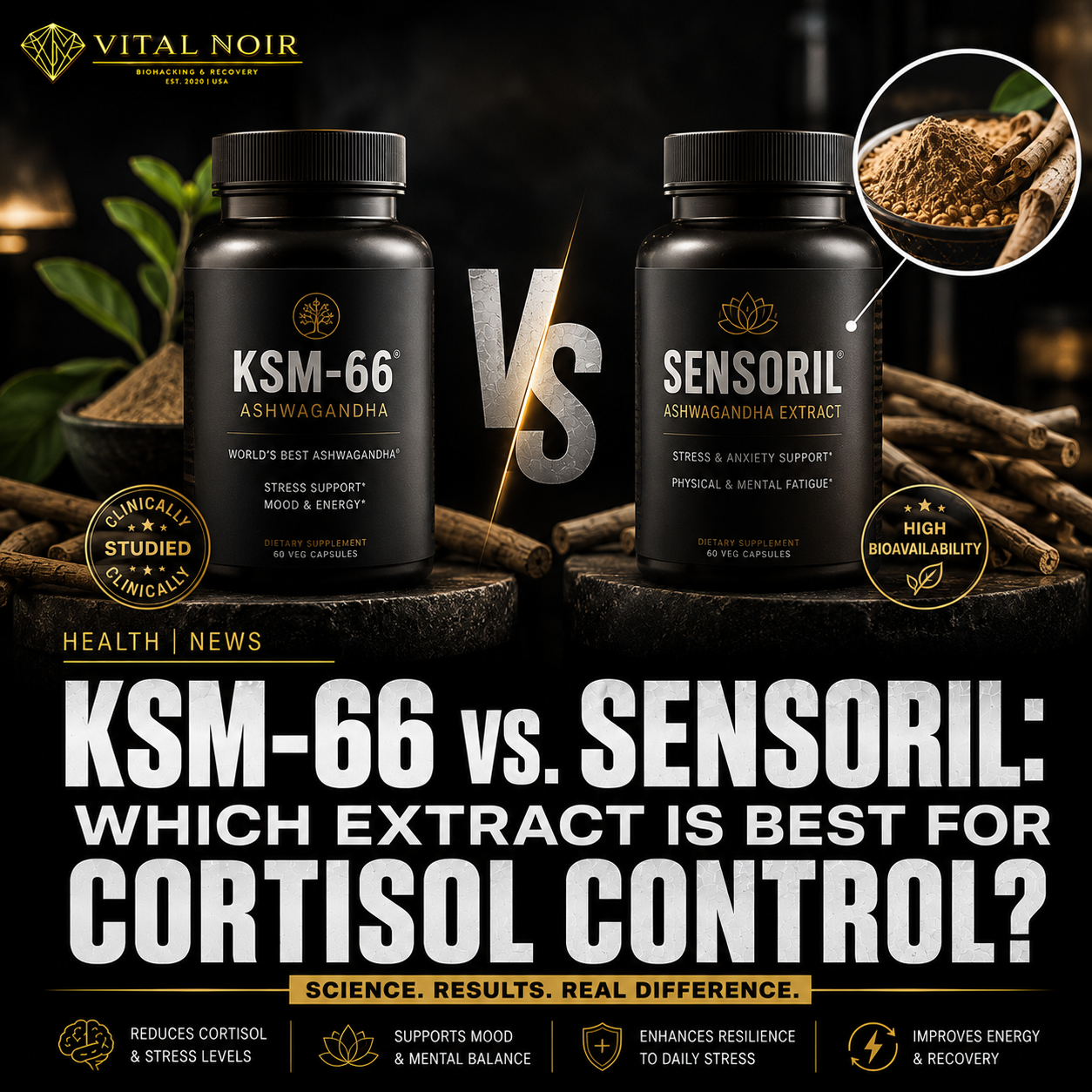
The comparison KSM-66 vs Sensoril is one of the most important discussions in modern adaptogenic supplementation, especially for individuals looking to manage cortisol levels, stress response, and overall hormonal balance.
Ashwagandha (Withania somnifera) has been widely studied for its potential role in supporting the body’s adaptation to stress through modulation of the HPA axis (hypothalamic-pituitary-adrenal system). However, not all extracts are the same.
Two of the most clinically recognized forms—KSM-66 vs Sensoril—differ significantly in composition, potency, and potential physiological effects.
Understanding Cortisol & Stress Biology
Cortisol is a key hormone involved in the body’s stress response. It follows a natural circadian rhythm, but chronic stress can disrupt this balance, potentially affecting:
- Sleep quality
- Mood stability
- Energy levels
- Immune function
- Cognitive performance
The HPA axis regulation is central to cortisol balance. When overstimulated, it may lead to prolonged elevated cortisol levels.
This is where adaptogens like ashwagandha become relevant. They are believed to help the body maintain homeostasis during stress exposure.
What is KSM-66?
KSM-66 is a full-spectrum, root-only extract of Withania somnifera. It is one of the most clinically studied forms of ashwagandha.
Key Characteristics:
- Root-only extraction (no leaves)
- Standardized withanolide profile (~5%)
- Focus on strength, vitality, and stress adaptation
- Often used in studies related to physical performance and stress resilience
KSM-66 is commonly associated with balanced cortisol support without excessive sedation, making it suitable for daytime use.
What is Sensoril?
Sensoril is a high-potency extract made from both root and leaf material.
Key Characteristics:
- Higher total withanolide concentration (~10% or more)
- Includes both root and leaf bioactive compounds
- Often associated with stronger calming and sedative effects
- Commonly studied for stress reduction and sleep support
Sensoril is frequently used in formulations targeting relaxation, anxiety reduction, and sleep quality improvement.
KSM-66 vs Sensoril: Key Differences
1. Composition
- KSM-66 → Root only
- Sensoril → Root + leaf
2. Potency
- Sensoril generally has higher withanolide concentration
- KSM-66 offers a more balanced adaptogenic profile
3. Functional Effect
- KSM-66 → Energy, resilience, stress adaptation
- Sensoril → Relaxation, calmness, sleep support
4. Cortisol Modulation
Both extracts have been studied for cortisol-related effects, but they may act differently depending on dosage and individual physiology.
Which Is Better for Cortisol Control?
From an evidence-based perspective, the answer to KSM-66 vs Sensoril for cortisol control is not absolute.
KSM-66 may be better for:
- Daytime stress management
- Physical performance under stress
- Cognitive clarity during cortisol fluctuations
Sensoril may be better for:
- Evening cortisol reduction
- Sleep quality improvement
- High anxiety or overstimulation states
Scientific Reality:
Research suggests both forms may support stress adaptation through HPA axis modulation, but individual response variability is significant.
Amazon Product Recommendations
Based on the comparison KSM-66 vs Sensoril, here are two commonly used supplement options:
🟡 KSM-66 Option
- Nutricost KSM-66 Ashwagandha 600mg
A standardized root extract commonly used for daily stress support and energy balance.

- 600mg of KSM-66 Ashwagandha Root Extract Per Serving (60 Servings)
- 60 Veggie Caps Per Bottle
- 5% Withanolides (30mg Per Cap)
🔵 Sensoril Option
- Sensoril Ashwagandha Capsules (125mg standardized extract)
A higher-potency extract often chosen for relaxation, stress relief, and nighttime use.
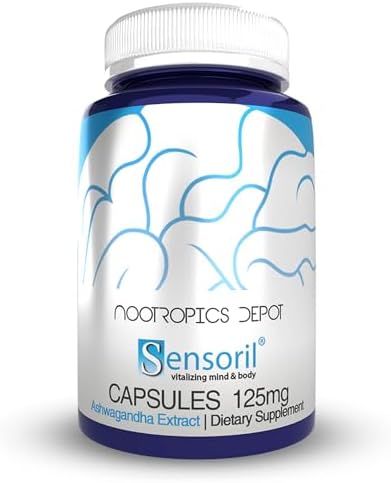
- Supports healthy energy levels*
- Supports healthy mental cognition*
- Supports cardiovascular health*
These two products represent the practical real-world application of the KSM-66 vs Sensoril comparison.
Expert Insight Summary
When evaluating KSM-66 vs Sensoril, the decision should be based on:
- Your stress pattern (day vs night)
- Desired effect (energy vs relaxation)
- Sensitivity to adaptogens
- Lifestyle and sleep quality
Neither extract is universally superior—they are functionally different tools within the same adaptogenic category.
Internal Knowledge Expansion
For a deeper understanding of how ashwagandha works across different extracts, mechanisms, and benefits, you can explore the foundational guide:
“Ultimate Guide to Ashwagandha” on Vitalnoir
This resource expands on dosage, mechanisms, and broader health applications beyond the KSM-66 vs Sensoril comparison.
❓ FAQ (AEO Optimized)
Is KSM-66 or Sensoril better for cortisol?
Both may support cortisol regulation, but KSM-66 is often used for daytime stress, while Sensoril is more calming.
Does ashwagandha really lower cortisol?
Studies suggest it may help reduce perceived stress and support cortisol balance, but results vary individually.
Can I take both KSM-66 and Sensoril?
Some users cycle them, but combining should be approached cautiously and ideally under professional guidance.
Which is better for sleep?
Sensoril is generally more associated with sleep support due to its calming profile.