




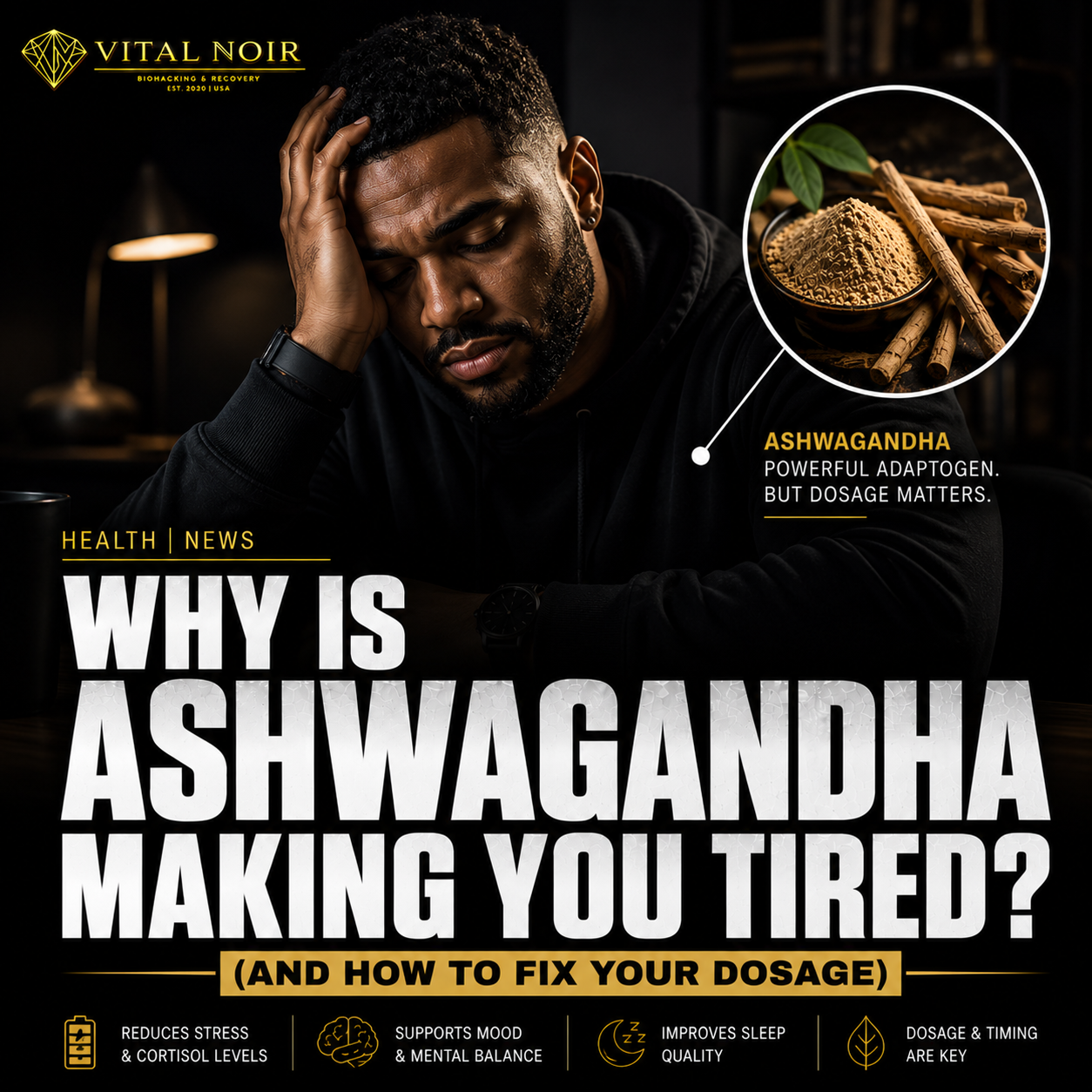
If you recently started taking ashwagandha and suddenly feel sleepy, sluggish, or mentally drained, you are not alone. One of the most common questions people ask online is:
“Why is ashwagandha making you tired?”
The answer is more nuanced than most supplement brands explain.
For some people, ashwagandha promotes calmness and deeper sleep by reducing stress hormones like cortisol. But in others — especially with incorrect dosage, timing, or low-quality extracts — it may lead to unwanted fatigue, brain fog, or daytime drowsiness.
In this guide, we’ll break down:
- why ashwagandha can make you tired
- the science behind cortisol and relaxation
- dosage mistakes to avoid
- how to adjust your routine safely
- when tiredness may signal a problem
If you want a complete breakdown of ashwagandha, including its history, benefits, mechanisms, and scientific research, read our pillar article:
“The Ultimate Guide to Ashwagandha”
This article focuses specifically on fatigue, dosage, and side effects.
Can Ashwagandha Make You Tired?
Yes — it can.
Ashwagandha (Withania somnifera) is classified as an adaptogen, meaning it may help regulate the body’s stress response. One of its best-known effects is reducing cortisol levels and promoting relaxation. (ods.od.nih.gov)
For many people, that calming effect is beneficial:
- less anxiety
- improved sleep
- lower stress
- reduced nervous tension
But if the calming response becomes too strong — especially during the daytime — it can feel like:
- fatigue
- low motivation
- sluggishness
- excessive calmness
- sleepiness
This effect is reported both in clinical literature and user experiences online. (verywellhealth.com)
Why Is Ashwagandha Making You Tired?
1. Your Dosage May Be Too High
This is the most common reason.
Many supplements market extremely high doses such as:
- 1500 mg
- 2100 mg
- 3000 mg+
But clinical studies often use standardized extracts closer to:
- 300–600 mg daily (ods.od.nih.gov)
Higher doses do not always mean better results.
Too much ashwagandha may:
- over-amplify relaxation
- reduce alertness
- increase drowsiness
- worsen daytime fatigue
If you recently increased your dose, tiredness may be your body signaling that you are taking more than needed.
2. Ashwagandha Lowers Cortisol
Cortisol is commonly called the “stress hormone,” but it also plays an important role in:
- energy regulation
- alertness
- wakefulness
- morning activation
Ashwagandha may help reduce elevated cortisol levels over time. (pmc.ncbi.nlm.nih.gov)
For people with chronic stress and anxiety, this can feel calming and restorative.
But if cortisol drops too much — or if your baseline stress levels were already low — you may experience:
- lower energy
- reduced stimulation
- daytime sleepiness
3. You’re Taking It at the Wrong Time
Timing matters more than many people realize.
If ashwagandha makes you relaxed or sleepy, taking it:
- early morning
- before work
- before studying
may not be ideal.
Many users tolerate it better:
- after dinner
- before bedtime
- in the evening
Switching your timing can sometimes completely eliminate daytime fatigue.
4. Your Body Is Recovering From Chronic Stress
This is an overlooked possibility.
Some people spend months or years in a constant “fight-or-flight” state driven by:
- stress
- anxiety
- overwork
- poor sleep
- high caffeine intake
When ashwagandha reduces stress signaling, the body may finally enter a recovery state. That transition can temporarily feel like:
- exhaustion
- heaviness
- increased sleep need
In some cases, the tiredness improves after several weeks as the nervous system stabilizes. (reddit.com)
5. You May Be Sensitive to Adaptogens
Not everyone reacts to adaptogens the same way.
Some individuals are naturally more sensitive to:
- calming herbs
- cortisol-lowering compounds
- nervous system regulators
Even low doses can produce:
- sedation
- brain fog
- low motivation
This variability is one reason why personalized dosing matters.
How to Fix Ashwagandha Fatigue
Reduce Your Dosage
If you are taking:
- 1500–3000 mg daily
consider lowering your dose significantly.
Many people respond well to:
- 300 mg
- 500 mg
- 600 mg standardized extract
Lower doses often reduce side effects while preserving benefits.
Take It at Night
If daytime fatigue persists:
- move your dose to evening
- avoid taking it before work or exercise
- combine it with your nighttime routine
This strategy aligns better with ashwagandha’s relaxing properties.
Choose a Better Extract
Not all supplements are equally standardized.
Look for:
- third-party testing
- verified withanolide content
- transparent labeling
- reputable manufacturers
Low-quality products may contain inconsistent active compounds.
Recommended Ashwagandha Products
1. Organic Ashwagandha Capsules
A convenient option for:
- standardized daily dosing
- easier dosage adjustments
- consistent supplementation
This format is often preferred by people trying to optimize dosage while minimizing fatigue.

- ✔️ Made with organic ashwagandha root powder and root extract for a full-spectrum supplement
- ✔️ 2,100 mg per serving, including organic ashwagandha root powder, standardized root extract (2.5% withanolides), and o…
- ✔️ USDA Certified Organic, Non-GMO, Gluten-Free, and Vegan
2. Organic Ashwagandha Root Powder
Ideal for:
- flexible dosing
- smoothies and teas
- traditional Ayurvedic use
- gradual dose experimentation
Powder can help users fine-tune intake more carefully than capsules.

- PREMIUM USDA ORGANIC ASHWAGANDHA POWDER (WITHANIA SOMNIFERA or INDIAN GINSENG): Our Gluten Free Organic Ashwagandha Root…
- NATURAL ADAPTOGEN: Often referred to as the “Indian Ginseng”, Ashwagandha Root is known for its adaptogen properties – s…
- AYURVEDA TRADITIONAL USE: For thousands of years as a rasayana (rejuvenative) and an adaptogenic herb, meaning that it h…
When Should You Stop Taking Ashwagandha?
You should consider discontinuing use and speaking with a healthcare professional if you experience:
- severe fatigue
- dizziness
- rapid heart rate changes
- thyroid symptoms
- persistent brain fog
- digestive problems
- unusual mood changes
Rare liver-related complications have also been documented. (health.com)
Because supplements can interact with medications and underlying conditions, medical supervision is important for:
- thyroid disorders
- anxiety medications
- antidepressants
- autoimmune diseases
- pregnancy or breastfeeding
Is Ashwagandha Better for Sleep Than Energy?
This depends on the person.
Some people report:
- improved sleep quality
- calmer mood
- better stress recovery
Others experience:
- excessive relaxation
- low daytime drive
- reduced stimulation
Ashwagandha is not a stimulant like caffeine. Its primary effects appear more related to stress regulation and nervous system balance than direct energy enhancement.
Final Thoughts
If you are asking:
“Why is ashwagandha making you tired?”
the most likely explanations involve:
- dosage
- timing
- cortisol reduction
- nervous system sensitivity
For many people, simple adjustments can help:
- lower the dose
- take it at night
- choose a standardized extract
- allow time for adaptation
Ashwagandha may support stress resilience and recovery, but more is not always better. Personalized dosing matters.
If you want a complete science-backed overview of ashwagandha, including benefits, risks, mechanisms, and supplement forms, explore our in-depth pillar guide:
FAQ
Can ashwagandha make you sleepy during the day?
Yes. Some people experience daytime drowsiness, especially with high doses or morning use.
What is the best dosage to avoid fatigue?
Most clinical studies use approximately:
- 300–600 mg daily
of standardized extract. (ods.od.nih.gov)
Should I take ashwagandha at night?
If it makes you tired, evening use is often better tolerated.
Can ashwagandha lower cortisol too much?
Potentially, yes. Excessive cortisol reduction may contribute to fatigue in some individuals.
Does tiredness from ashwagandha go away?
For many users, yes. Symptoms may improve after adjusting dosage or timing.
You have not enough Humanizer words left. Upgrade your Surfer plan.